
#9 Threshold Accelerators: Why the "One Perfect Path" Is a Dangerous Illusion

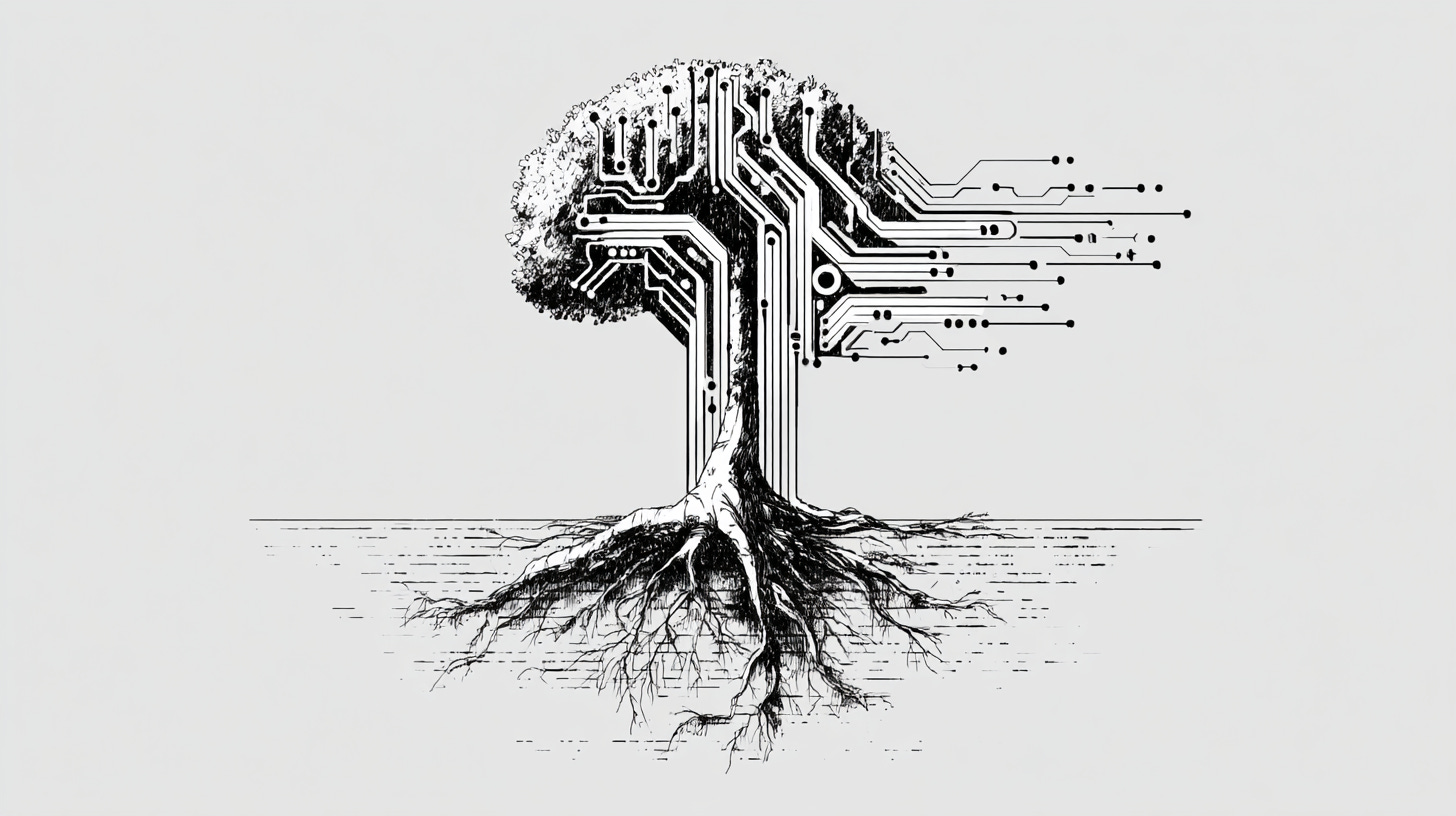
Welcome to the Strategic Architecture Universe™: where ecosystem thinking revolutionizes strategy, multiple independent paths compound into inevitability, and Threshold Accelerators™ transform how success gets engineered.
Edward Azorbo
The Single Path Fallacy
I once had a conversation with a mentor who had successfully scaled a $5 million business to $30 million in just three years. When I asked how he did it, his answer surprised me and has stuck with me ever since: "I didn't find one way to scale. I found ten."
I remember the early days when we first set up our marketing agency. We were fortunate, or not so fortunate depending on how you look at it, to have one of the top fashion brands in Barcelona. We took them on when they were in the descending phase as a brand. They were having a big relevance issue, which of course generated a lot of tension, since when you're less relevant there's more friction when you launch any campaign.
The problem was that they represented 80% of our revenue. Basically, if they stopped working with us, the business was nonexistent.
I remember me and my partner having to go to weekly meetings with the brand that we dreaded. Most times, no matter the result, even if it was good, it would not be enough. The brutal reality: it was a sinking ship. Unless it stopped sinking, no result would be good enough.
I remember the day when we were able to make our webinar funnel work and shift into group consulting. It was, in a sense, liberation day. We went from a few clients to multiple clients paying less, but with a diversified base.
A week later we dropped the client.
This taught me that there's a lot to be said for creating redundancy in the system.
There's a persistent myth in business strategy that I see crippling execution time and again: the belief that success comes from identifying the "one right path" and doubling down on it exclusively. This approach is so deeply embedded in startup business thinking that it's rarely questioned. Find your channel, optimize it relentlessly, and scale to infinity.
But here's the reality I've observed over years of building and scaling businesses: betting everything on a single path is one of the riskiest strategic moves you can make, regardless of how promising that path initially appears.
What if, instead of one perfect path, you designed multiple, independent, high-probability paths to your goals? That's the logic behind what I call Threshold Accelerators.
The concept of Threshold Accelerators emerged directly from the nature of Strategic Triggers that I explored in a previous article. Strategic Triggers are binary transformation points you either hit them or you don't. It's a precision game. Betting on a single path to reach these triggers isn't playing the odds in your favor. That's why I developed Threshold Accelerators: multiple independent paths designed to help you reach your Strategic Trigger with what I call the Overwhelming Force Principle creating mathematical certainty through strategic redundancy.
Micro-summary:
→ Betting on one strategy is a risk. Designing Threshold Accelerators creates strategic inevitability through redundancy, not luck.
“Betting everything on a single path is one of the riskiest strategic moves you can make, regardless of how promising that path initially appears.”
Rethinking the Perfect Path
The allure of the single path is easy to understand. It offers simplicity, focus, and the illusion of control. "If we just perfect this one channel," the thinking goes, "we'll create a predictable growth engine." This mindset is reinforced by success stories we hear about companies that seemed to nail one strategy perfectly:
Airbnb scaling through virality and user referrals
Booking.com dominating through performance marketing and paid ads
Other companies seemingly conquering their markets through SEO mastery
There's no denying these approaches can work. Some businesses have indeed found tremendous success by identifying and optimizing a single channel. But here's the critical "but" that often gets overlooked: these single-channel success stories are both rarer and more vulnerable than most people realize.
For every Airbnb that scaled through virality, there are thousands of failed startups that bet everything on the same approach. For every Booking.com that mastered paid acquisition, countless others saw their unit economics collapse when competition intensified or platform algorithms changed.
Even the companies that successfully rode one channel to growth eventually face a moment of truth: adapt beyond that channel or risk everything.
The Mathematical Reality of Single-Path Risk
Let's look at this mathematically. Imagine you've identified a promising strategy that you believe has a 70% chance of hitting your target. Those seem like good odds, right? But here's the sobering reality: you still have a 30% chance of complete failure.
In most businesses, a 30% chance of missing a critical strategic target isn't just uncomfortable. It's existentially threatening. Yet executives make these bets daily, putting everything behind a single approach with similar or worse odds.
This isn't just theory. I've lived it. In the early days of building our consulting business, we were completely dependent on Facebook ads as our acquisition channel. When our account was suddenly shut down (as I shared in a previous article), we faced a genuine crisis. Our entire growth strategy hung by a single thread, and when that thread snapped, we nearly lost everything.
That experience taught me a lesson I'll never forget: no matter how effective a single path appears, its effectiveness instantly drops to zero when it's blocked.
Threshold Accelerators: The Ecosystem Solution
What transformed my thinking was observing how nature solves this exact problem. Natural ecosystems don't rely on a single species or process. They create redundant, overlapping systems that ensure survival despite individual failures.
The oak tree doesn't produce just one acorn hoping it will grow; it produces thousands, creating mathematical certainty that some will succeed. This isn't inefficiency. It's a sophisticated strategy for ensuring inevitable success.
When I began applying this ecosystem thinking to business strategy, everything changed. Instead of seeking the "one perfect path" to hit our strategic triggers, we started designing multiple independent paths. What I now call Threshold Accelerators.
What Are Threshold Accelerators?
Threshold Accelerators are high-probability, independent pathways designed to achieve strategic triggers efficiently. They amplify progress by leveraging natural strengths, system efficiencies, and hidden opportunities within a strategy.
The key characteristics that define true Threshold Accelerators:
Independence: Each accelerator functions as its own complete path to the trigger, without relying on other accelerators to succeed.
Mathematical Validation: They're based on clear metrics and validated patterns, not just intuition or hope.
Systemic Integration: They connect seamlessly with your existing systems and align directly with your strategic triggers.
Compounding Effect: When multiple accelerators operate simultaneously, they create a multiplier effect rather than just adding together.
The math behind this approach is compelling. If you have a single path with a 70% chance of success, you have, unsurprisingly, a 70% probability of hitting your target. But with three independent accelerators, each with a 70% probability, your overall chance of success jumps to 97.3%. This isn't just an incremental improvement; it's a fundamental transformation of your strategic position.
Micro-summary:
→ Three independent 70% paths don't give you 210% success. They give you 97.3% mathematical certainty. That's the power of true independence.
Threshold Accelerators in Action
This isn't theoretical. When we launched our AI transformation program with a target of 100 clients, we didn't just create one amazing campaign. We built five parallel paths, each capable of delivering success independently:
Accelerator 1: Event focused on AI for our existing warm audience. Clients of our consulting business, Velocity, and our marketing certification program.
Accelerator 2: Premium bundle option that included our AI transformation program with access to Influence, targeted at current clients.
Accelerator 3: CIMA event specifically designed for experts and consultants looking to enhance their businesses with AI.
Accelerator 4: Upsell path for consulting clients who were in their onboarding phase.
Accelerator 5: Events targeting completely cold audiences who weren't familiar with our work.
The power in this approach was that each accelerator worked independently, with its own resources and success metrics. When one faced temporary challenges (like lower-than-expected attendance at a specific event), the others continued generating results, making our overall success practically inevitable.
Beyond Channel Diversification
It's important to understand that Threshold Accelerators are not just about diversifying channels. Sometimes it's about creating multiple paths even within the same channel.
You might be running an event generating leads via Meta, while simultaneously testing another funnel offering a low-price frontend product that converts later to sales calls. Both use the same platform but represent independent paths to success.
I've seen businesses become dangerously fixated on finding the "one perfect funnel" or the "one perfect lead magnet" when they could be running several in parallel, learning from each, and allowing multiple streams to contribute to their trigger. This approach not only distributes risk but often leads to unexpected insights about what really resonates with different segments of your audience.
The Multi-Path Advantage
Implementing Threshold Accelerators creates four strategic advantages that transform your approach to execution:
Risk Distribution: You're no longer vulnerable to the failure of a single approach or channel.
Learning Maximization: Each accelerator generates valuable data and insights that often transfer between paths.
Option Creation: Multiple paths don't just lead to your current trigger. They create options for future strategic moves.
Mathematical Inevitability: The combination of independent paths transforms success from "possible" to "probable."
This multi-path approach isn't about lack of focus or hedging bets. It's about mathematical certainty. It's about recognizing that in a complex, unpredictable business environment, the idea of the "one perfect path" is usually a dangerous illusion.
Micro-summary:
→ The most successful entrepreneurs don't find one way to scale. They find ten. Multiple paths isn't hedging. It's strategic architecture.
“This approach not only distributes risk but often leads to unexpected insights about what really resonates with different segments of your audience.”
Embracing the Strategic Portfolio
The strategy of multiple paths isn't just a theory. It's a mathematical approach to making success inevitable. When you implement multiple Threshold Accelerators, you're not just improving your odds; you're fundamentally transforming the nature of strategic execution.
I remember a quote by legendary direct response marketer and copywriter Dan Kennedy who said that "the worst number in marketing is one." I tend to agree, and would extend this wisdom beyond marketing to all of strategic execution.
Consider this: No successful investor would put their entire portfolio into a single stock, no matter how promising it appears. Yet in business strategy, we routinely make exactly this mistake. Betting everything on a single channel, approach, or tactic.
The most resilient businesses I've built and advised share this common trait: they don't rely on finding the mythical "perfect path." Instead, they create multiple, independent routes to their strategic triggers, ensuring that when one path faces obstacles, others continue propelling them forward.
This isn't about hedging or lack of focus. It's about mathematical certainty.
Starting today, look at your own strategic triggers and ask: "Do we have multiple, independent paths to achieve this goal?" If the answer is no, you're not just missing opportunities. You're accepting unnecessary risk.
In future articles, I'll dive deeper into how to identify the right accelerators for your business, how to ensure they remain truly independent, and how to optimize them systematically. But the first step is embracing this fundamental shift in thinking: from searching for the one perfect path to building a portfolio of paths that make success inevitable.
The most successful entrepreneurs don't just find one way to scale. They find ten.
I don't have all the answers, nobody does. These frameworks are simply how I make sense of the chaos. Take what serves you, leave what doesn’t, and keep building.
Building Strategic Architecture, Edward Azorbo